
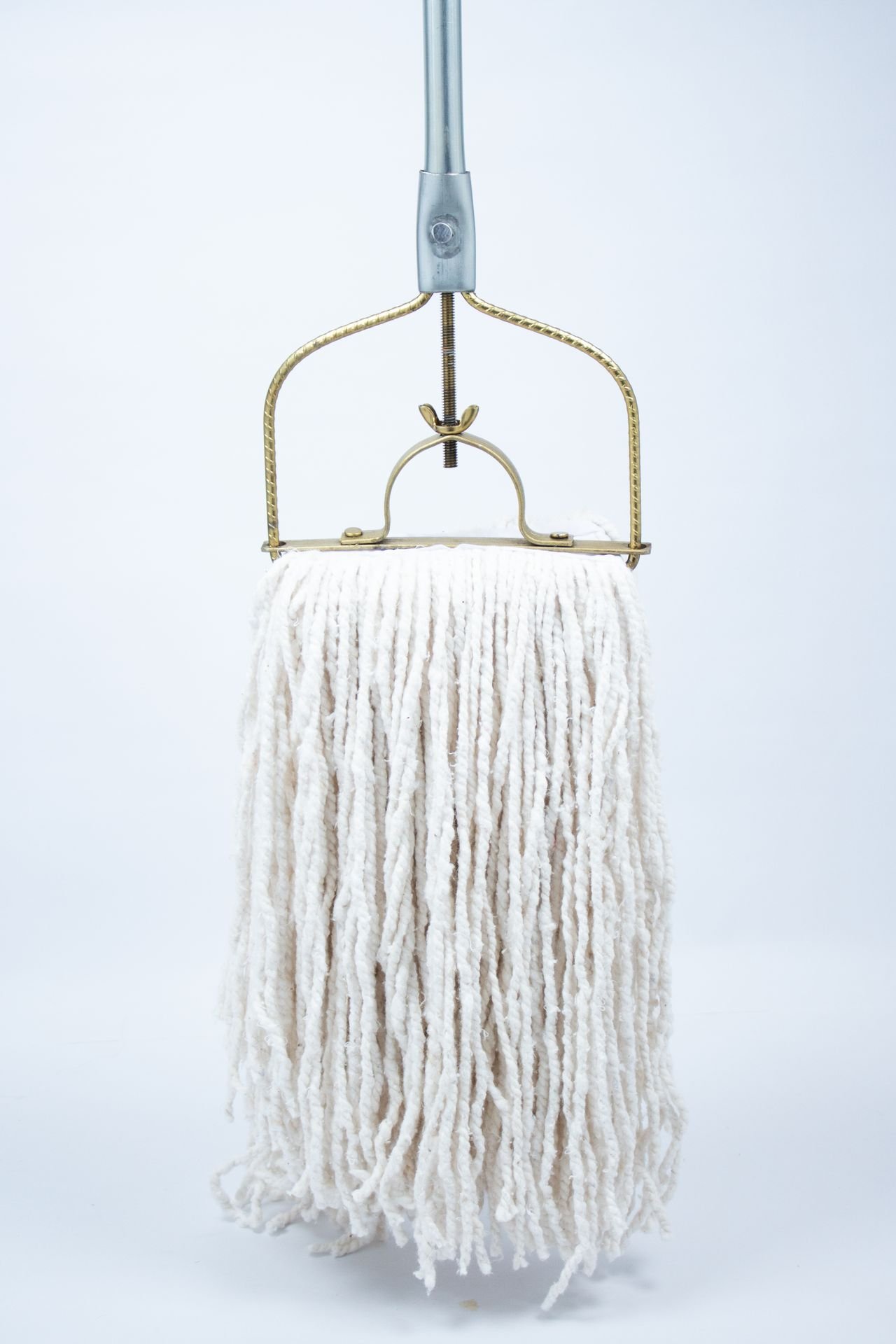
You mop the kitchen, and once the floor dries, it still looks streaky, and something smells a little off. Most of the time, the problem isn’t the floor. It’s the mop itself. It’s dirty! A mop or broom that’s full of old dirt, hair, and damp grime doesn’t clean; it just moves the mess around.
Here’s how to clean a mop and a broom, how often to do it, and when it’s time to replace them.
Disclaimer: This post may contain affiliate links; see our disclaimer page here.
Table of Contents
Why Clean Your Mop and Broom
A mop head stays damp and holds dirt, which is exactly what bacteria and mildew like. A 2022 study in the Journal of the American Association for Laboratory Animal Science notes that reusing mop heads can lead to bacterial growth and spread contamination while you clean. The study was done in a lab setting, not a home, but the idea is the same: a dirty mop head works against you.
The good news is that learning how to clean a mop takes just a few minutes, and it makes your tools last longer too.
Before You Start
Before you get into how to clean a mop, wear rubber gloves if you’re using hot water or any cleaner, and check the care label on your mop head. Some heads are machine washable, and some aren’t, and bleach can damage or fade certain fabrics.
If you use bleach to disinfect a white cotton mop head, follow the instructions on the bottle and never mix it with other cleaners. UVM Health warns that mixing bleach with an acid such as vinegar, or with ammonia, can release dangerous gases. Use bleach only in a ventilated space, and skip it entirely if you don’t need it. Hot water and dish soap will do the job for everyday cleaning.
How to Clean a Mop Head
After Every Use: Rinse
- Rinse the mop head under hot running water until the water runs clear.
- Wring it out as much as you can.
- Hang it up or stand it head-up so it can dry (see the drying tips below).
Deep Clean: Soak in Hot, Soapy Water
- Fill a bucket with hot water and a good squirt of dish soap.
- Put the mop head in and swirl it around, pressing the fibers so the soapy water reaches the middle.
- Let it soak for at least 10 minutes, or longer for a very dirty head.
- Rinse it thoroughly under clean water until no soap or suds are left, then wring it out.
If the head is white cotton and you want to disinfect it, you can soak it in a diluted bleach solution made according to the label, then rinse very well. Don’t let it sit for hours, since long soaks can leave a damp head that grows mold.
Machine-Washing a Removable Mop Head
- Take the head off the handle and check the care label.
- Wash it on a hot cycle by itself, not with clothes, so lint and dirt don’t end up on your laundry.
- Skip fabric softener, which can coat microfiber and make it less absorbent.
- Let it air dry completely, ideally in the sun, before you put it back.
Drying and Storing
The last step in how to clean a mop is drying it properly. Never put a damp mop head away in a closet or bucket. Hang it up, or stand the mop with the head pointing up, in a well-ventilated spot until it’s fully dry. If the mop head still smells after a proper wash, it’s usually time for a new one.
Cotton or Microfiber?
If you’re choosing a new mop, a hospital study by University of North Carolina researchers compared the two types. With a detergent cleaner, microfiber mops removed about 95% of microbes, while cotton string mops removed about 68%. It was tested in hospital rooms, not homes, so treat it as a good sign for microfiber, not a guarantee. Microfiber heads are also easy to machine wash.
How to Clean a Broom
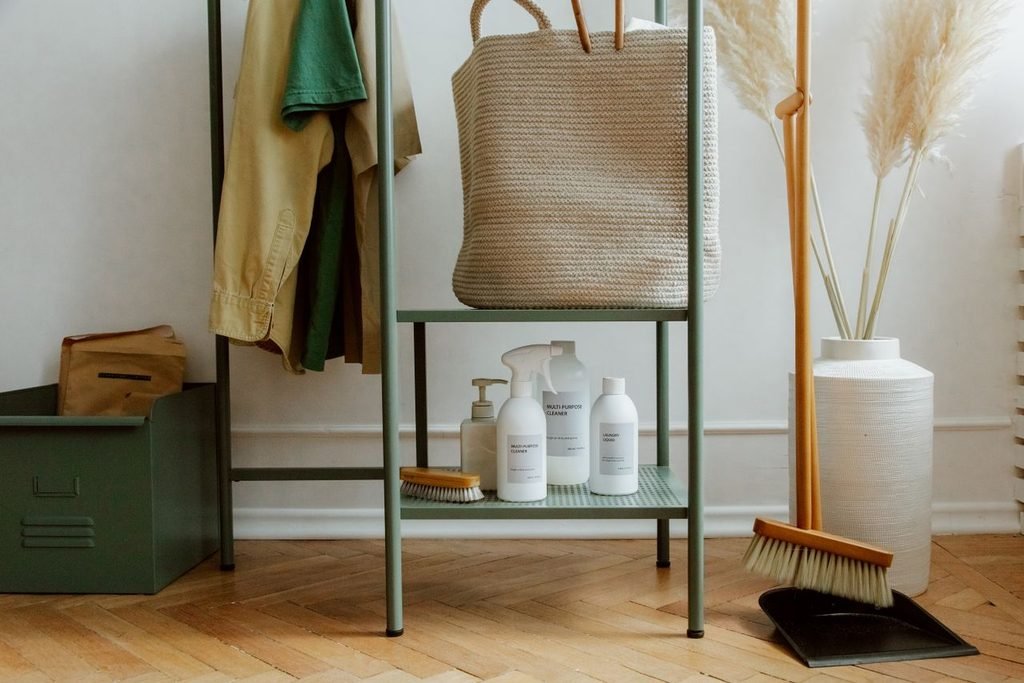
- Take the broom outside and shake or tap it against a step or wall to knock out loose dust and dirt.
- Pull out hair, thread, and fluff with your fingers or an old comb. Cut away anything wrapped tightly around the bristles.
- Fill a bucket with warm water and a few drops of dish soap, then swish the bristles around in it. Don’t leave a natural-fiber broom soaking for long, since that can weaken the bristles.
- Rinse the bristles with clean water and wipe the handle with a damp microfiber cloth.
- Hang the broom up, or stand it with the bristles pointing up, until it’s completely dry.
Don’t store a broom resting on its bristles. They bend, and a bent broom doesn’t sweep well.
How Often to Clean and When to Replace
| Tool | Quick Clean | Deeper Clean | Replace When |
|---|---|---|---|
| Mop head | Rinse after every use | Soak or machine wash regularly, for example weekly | It smells after washing, frays, or stays grubby (roughly every few months) |
| Broom | Shake out after use | Wash in soapy water every month or so | Bristles are bent, splayed, or shedding |
| Bucket | Rinse and dry after use | Scrub with dish soap when it looks grimy | It’s cracked or stained beyond cleaning |
These timings are general rules of thumb, not strict rules. If you mop often or have pets, clean your tools more often.
FAQ
Can a dirty mop make my floor dirtier?
Yes. A mop head full of old dirt and bacteria can spread that mess across the floor instead of removing it. That’s why rinsing after every use matters.
Can I use vinegar to clean a mop head?
You can use it on its own, but never mix it with bleach. Hot water and dish soap are enough for most mop heads.
How do I get the smell out of a mop?
Soak the head in hot, soapy water, rinse well, and dry it fully. If it still smells after that, replace it. Smells usually mean the head has stayed damp for too long.
Can I put my mop head in the washing machine?
If the head comes off and the care label allows it, yes. Wash it on hot by itself, skip the fabric softener, and air dry it.
Cleaning a mop is half the job. For stubborn marks on the floor itself, see How to Remove Paint from Floors.